Postbaccalaureate Fellow

National Institutes of Health, Bethesda, MD | Aug 2014 – June 2015 (1 year)
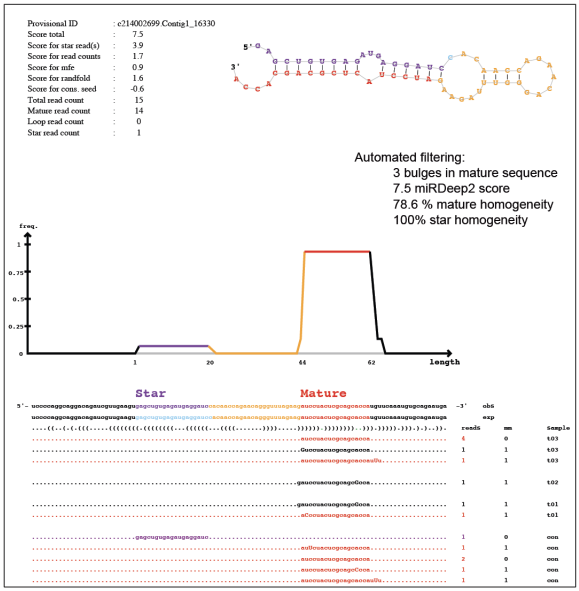
Screenshot of miRDeep2 output showing a predicted microRNA in Hydractinia that passed filtering based on secondary structure, miRDeep2 score, and strand homogeneity.
High-confidence microRNA candidate in Hydractinia. This screenshot shows miRDeep2 output for a predicted microRNA that passed automated filtering based on secondary structure and computational scoring. (Schnitzler et al 2022).

Summary

  • Collaborated with computational biologists to analyze the genomes of Hydractinia echinata and Hydractinia symbiolongicarpus by designing and implementing analysis of novel small RNAs during head regeneration for publication
  • Employed a domain architecture search strategy to identify TRAF immune genes in the genomes of multiple eukaryotes to explore Cnidarian evolution

Presentations

  • Klasfeld, S., Baxevanis, A., & Schnitzler, C. (2015, October 22). Small RNA discovery and expression during regeneration in the colonial hydroid, Hydractinia [PowerPoint slides]. Bioinformatics Scientific Interest Group (BSIG), NIH.

Selected Awards

  • Outstanding Poster Award at NIH Post Baccalaureate Poster Day 2015

  • Bioinformatics-Scientific Interest Group 3rd Annual Poster Day Winner (First Place)

Presentations

Small RNA discovery and expression during regeneration in the colonial hydroid, Hydractinia

Klasfeld, S., Baxevanis, A., & Schnitzler, C.

PowerPoint slides Bioinformatics Scientific Interest Group (BSIG), NIH October 22, 2015